


The rate of change in business is faster than ever. New technology, shifting client expectations and constant access to information mean leaders are making more decisions, processing more inputs and adapting more frequently. For many business leaders, burnout is therefore no longer simply about working long hours, it is increasingly driven by cognitive overload.
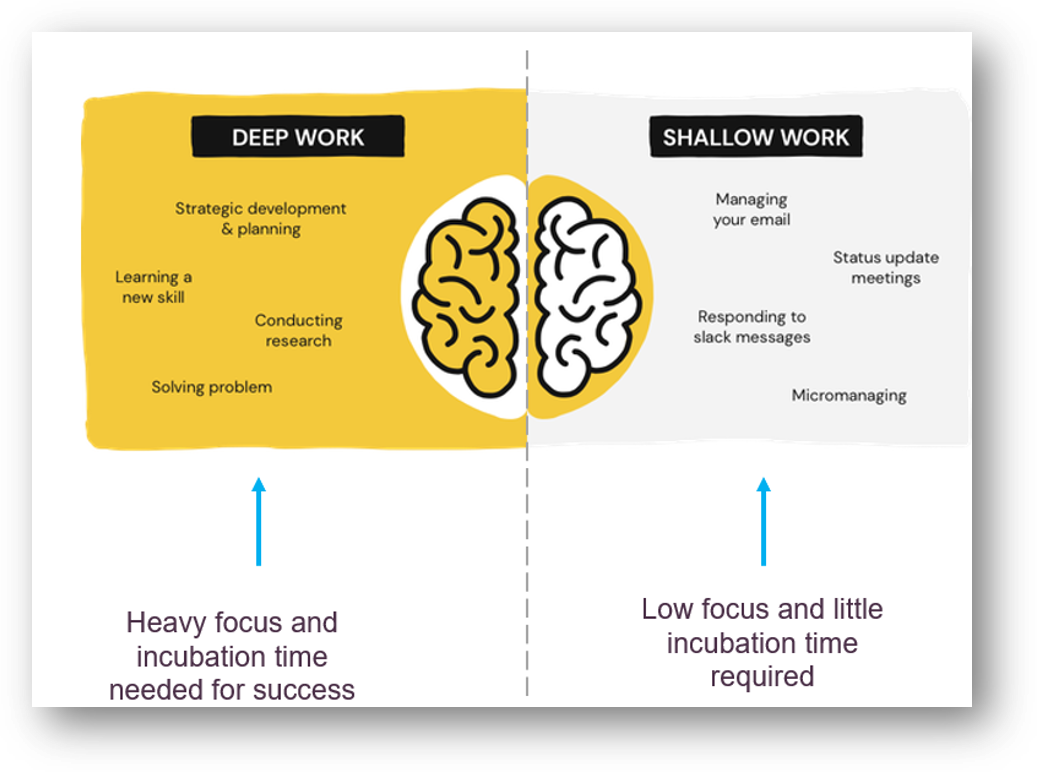
Research referenced in our recent leadership session suggests that after an interruption, it can take approximately 23 minutes to fully refocus. When this happens repeatedly throughout the day, important strategic work is easily crowded out by emails, meetings, approvals and status updates.
AI is making work faster, but is it making leadership harder?
Artificial intelligence offers significant opportunities to improve efficiency, particularly for routine tasks such as drafting, formatting, summarising and preparing updates. However, it can also increase the volume of work requiring review.
Emails become longer, short reports turn into lengthy drafts and meeting notes become detailed essays. Without clear direction and quality standards, AI may help teams produce more work without necessarily producing more value.
This presents a particular challenge for traditional business structures, where work flows upward and the leader acts as the final reviewer, approver and decision-maker. As AI accelerates the volume of analysis, communication and reporting, the leader can quickly become the bottleneck.
A different approach to leadership
The answer is not to avoid AI. It is to lead differently.
Leaders may need to become involved earlier in the process, setting a clear direction before significant work begins. This means defining the purpose, desired outcome, boundaries and expected level of detail before a team member or AI tool starts producing an answer.
Work can then be separated into two broad categories:
- Judgement-based work, which requires human experience, context, creativity and decision-making.
- Repeatable work, which can be completed or supported by AI within clear parameters and appropriate quality controls.
This allows routine work to move efficiently while ensuring matters requiring genuine judgement receive the right level of human attention. It can also reduce the volume of unnecessary work reaching leaders for final review.
Five practical steps for business leaders
1. Protect thinking time like a meeting
Block uninterrupted time in your calendar for strategically important work. Treat this time as seriously as a client or board meeting and avoid using it to clear emails or review routine outputs.
2. Set a quality bar, not a quantity bar
Make it clear that a concise and practical one-page plan is often more valuable than a five-page AI-generated draft. Reward clarity, judgement and usefulness rather than volume.
3. Set the direction before AI is used
Most AI problems begin with an unclear brief. Define the goal, audience, constraints and desired output before work starts. AI can accelerate progress, but it can also accelerate work in the wrong direction.
4. Treat recovery as an input to performance
Sleep, exercise, family time and clear finishing times should not be seen merely as rewards when work is complete. They help protect the mental capacity required for good decisions, strategic thinking and resilience.
5. Review where your attention goes
At the end of each week, consider what required genuine thinking and what was largely reactive noise. Identify tasks that can be delegated, simplified, automated or stopped altogether.